


Blog
Wool: A Natural Wonder – History, Process & Applications

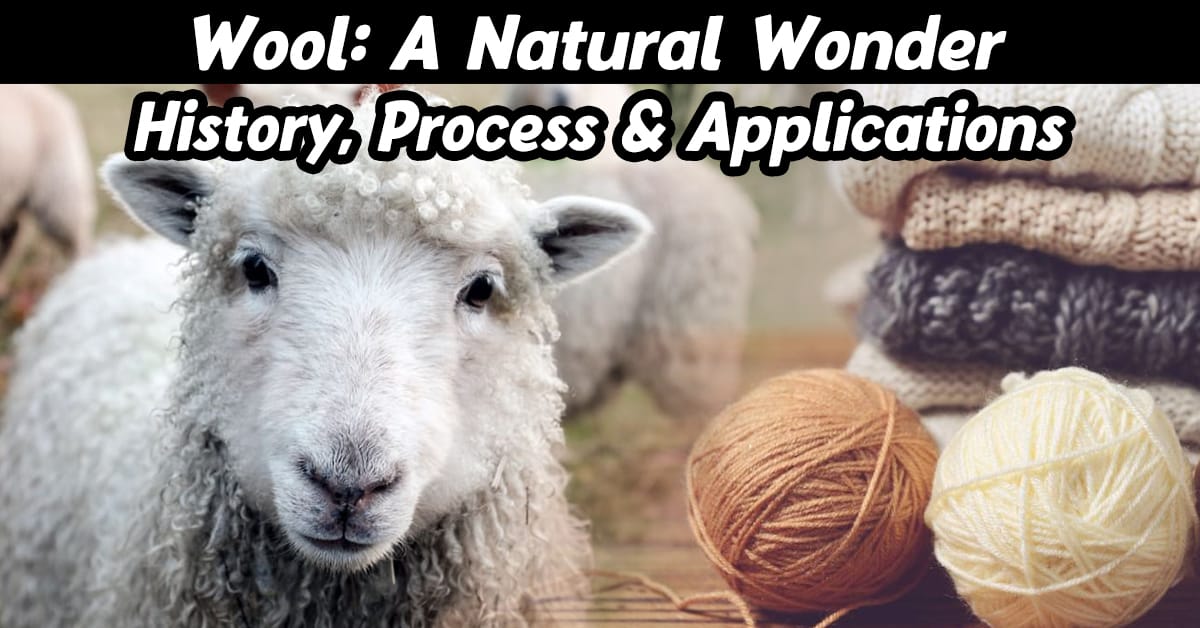
Wool, a textile fiber sourced from animals like sheep, goats, rabbits, and camelids, stands out among natural fibers. Additionally, the term encompasses inorganic materials like mineral wool and glass wool, exhibiting properties akin to animal wool. The chemical composition of wool distinguishes it from plant fibers like cotton. Wool, an animal fiber, is mainly made up of protein with a small amount of lipids, while cotton is primarily cellulose. Wool's unique composition contributes to its exceptional qualities, offering warmth and insulation. Its versatility extends to various animal sources, ensuring a broad range of textures and characteristics. The distinction between animal and plant fibers lies not only in their origin but also in their chemical composition, shaping their respective properties and applications in the textile industry.
Table of Contents
ToggleMineral wool:
Mineral wool is a fibrous material created by spinning molten minerals or rocks, like slag and ceramics. It finds use in thermal insulation (for structures and pipes), filtration, soundproofing, and as a hydroponic growth medium due to its diverse applications and properties.
Glass wool:
Glass wool, an insulating material crafted from glass fibers arranged with a binder to resemble wool, exhibits excellent thermal insulation due to numerous small air pockets trapped between the glass. Glass wool offers versatility in its application methods. It comes in pre-formed rolls or slabs with various thermal and mechanical properties to suit different needs. But that's not all, it can also be sprayed or applied directly onto surfaces for insulation. This flexibility makes it a widely used material. The modern method of producing glass wool is credited to Games Slayter of Owens-Illinois Glass Co. in Toledo, Ohio, with his patent application filed in 1933. This innovation revolutionized insulation, offering a versatile solution with widespread applications in construction and other industries.
History of Wool:
The history of wool traces back to wild sheep, initially more hairy than woolly. Domestication occurred 9,000 to 11,000 years ago, with woolly sheep selection dating back to around 6000 BC. Sheep with woolly fleeces arrived in Europe during the 4th millennium BC. The earliest European woolen textile, dating back to around 1500 BC, was unearthed in a Danish bog. Before the invention of shears, people would pluck or comb wool directly from the sheep. In Roman times, wool, linen, and leather-clad Europeans, while cotton from India and silks from China were luxurious novelties. The wool trade flourished in medieval times, transforming into a vital economic force in the Low Countries and central Italy by the 13th century. The Florentine wool guild, Arte della Lana, and networks like the Champagne fairs propelled the trade, reaching Naples, Sicily, Cyprus, Majorca, Spain, and Constantinople. England's economic dependence on wool was underlined by their export tax, the "Great Custom." This importance is further symbolized by the "Woolsack," the seat of the House of Lords' presiding officer. Cistercian houses played a key role in this trade, shipping raw wool to Flanders for dyeing and conversion into cloth. The "putting-out" system emerged, dividing the manufacturing process into trades overseen by entrepreneurs. Wool's value lies in dyeing and finishing, creating a vibrant textile industry. The Medici and Florence's banking houses thrived on wool, shaping policies through the Arte della Lana. Spain's Mesta Union controlled sheepwalks, influencing the Iberian landscape. The German wool market, relying on Spanish sheep, lagged behind Britain. The Industrial Revolution brought mass production to wool manufacturing. Australia's colonial economy centered on sheep, surpassing the German wool trade by 1845. With synthetic fibers gaining popularity, wool production decreased, impacting sheep growers who turned to meat production. Superwash wool technology emerged in the 1970s, making wool machine-washable and durable. In 2004, the world's finest wool bale sold for AU$3,000 per kilogram. In 2008, a record-setting bale fetched AU$2690 per kilo. Innovations like a shower-washable wool suit showcased wool's versatility. Recognizing the importance of natural fibers, the United Nations declared 2009 the International Year of Natural Fibres. Despite challenges, wool maintains its appeal, blending tradition with technological advancements.
Wool Scouring:
Sheep shearing yields wool in its raw form, also known as "greasy wool" or "wool in the grease." This freshly shorn wool contains a substantial amount of lanolin, a valuable oil. However, it also includes unwanted materials like dead skin cells, sweat residue, and potential contaminants such as pesticides and plant matter picked up from the environment. To make it suitable for commercial use, the wool must undergo scouring, a cleaning process. Scouring ranges from a simple warm water bath to an intricate industrial procedure involving detergents and alkali in specialized equipment. North-west England saw the creation of specific potash pits for one purpose: to produce potash for a local soft soap used in scouring white wool. Commercial wool often undergoes chemical carbonization to eliminate vegetable matter. In less-processed wools, hand removal of plant material may occur, preserving some lanolin using milder detergents. Aran Island fishermen rely on exceptionally water-resistant garments knitted from yarn made with this semi-grease wool. Lanolin, extracted from wool during processing, finds widespread use in cosmetic products, particularly in hand creams.
Wool is the Best Material for Insulated Construction Jackets:
Wool also referred to as fleece, tweed, or fur, exhibits a 200+ thread count and remarkable moisture-wicking and heat-retention properties. With moderate breathability, it proves ideal for maintaining warmth in cold climates, especially in insulated construction jackets. Icewear's study, in collaboration with a mechanical engineer specializing in energy and heat, found wool to outperform cotton and polyester in retaining heat. Thicker Icelandic wool offers enhanced warmth, with a wool-acrylic blend falling in between. The research analyzed the coefficient of thermal conductivity, assessing how easily heat passes through different clothing materials. While Icelandic wool and regular wool scientifically provide the utmost warmth, the thickness of materials and layering techniques significantly influence one's ability to stay warm.
The Manufacturing Process
Shearing:
Once a year, usually in spring, sheep get their wool removed, called shearing. An experienced shearer can do this for up to two hundred sheep per day. The wool from a sheep can weigh between 6 and 18 pounds (2.7 and 8.1 kilograms). They try to keep the wool in one piece. While some sheep are still sheared by hand, new technologies are emerging that utilize computers and robotic arms for faster and more precise clipping.
Grading and Sorting:
Grading is about separating the wool based on its overall quality. Sorting splits the wool into different sections with fibers of varying quality from different parts of the body. The best wool comes from the shoulders and sides for clothing, while the lesser quality from the lower legs is used for rugs. In wool grading, high quality doesn't always mean high durability.
Cleaning and Scouring:
"Raw" or "coat with grease wool," which is wool that was recently sheared, contains dried sweat, sand, and filth. These make up anywhere from thirty to seventy percent of the weight of the wool overall. First, the wool undergoes cleaning baths to remove dirt, sweat, and plant matter. These baths use water, soap, and soda ash. Valuable byproducts like lanolin are then salvaged for other uses. Finally, the wool receives an oil treatment to improve manageability.
Carding:
A process called carding utilizes metal teeth to straighten and blend fibers. It removes dirt and other matter. For worsted yarn, carded wool goes through gilling and combing. These remove short fibers and align longer ones. Carded wool for woolen yarn goes directly to spinning.
Spinning:
Spinning fibers together form a strand of yarn. Spinners create yarn by twisting together two, three, or even four strands of wool using various machines. The finished yarn is then wound onto bobbins or cones for storage or use.
Weaving:
Clothing items can be made from fleece yarn using either a simple or twill weave. Woolen yarns provide a gentler, looser texture, while worsted yarns give a fragile, firmly woven texture.
Finishing:
Both worsted and woolen receive finishing techniques like decorating, crabbing, and fulling after weaving. After weaving, both worsted and woolen fabrics undergo finishing techniques like decorating, crabbing, and fulling. Dyeing, however, is typically done before weaving.